
Industrial Performance & Profitability
Reduce your energy costs by 40 to 80% and increase your yields by 30 to 70%. State-of-the-art LED technology, crop-optimised spectra, automation integration and documented return on investment of 2 to 3 years.
Energy consumption
Average yield
Return on investment
LED lifespan
The Energy Challenge of Greenhouses
Lighting represents the heaviest cost centre in intensive greenhouses. Understanding these figures means understanding the urgency of the LED transition.
Lighting energy
Lighting accounts for 25 to 30% of the total energy consumed in intensive greenhouses in Northern Europe.
Industrial kWh price
Average industrial electricity cost (0.12 to 0.18 € excl. VAT/kWh). Every watt saved directly impacts the margin.
HPS consumption
A 1000W HPS lamp consumes approximately 325 kWh/m²/year. Switching to LED reduces this consumption by 40 to 50%.
LED lifespan
LEDs achieve L90 > 36,000-50,000h (8-12 years) versus only 10,000-20,000h for HPS bulbs (replacement every 1-2 years).
Hidden HPS maintenance costs
Beyond raw consumption, HPS lamps generate considerable maintenance costs: bulb replacement every 1 to 2 years, progressive light output degradation, failing ballasts and regular technician interventions.
- HPS: Bulb replacement 50-80€ × 2/year per fixture
- HPS: Regular replacement labour
- LED: Zero replacement for 8-12 years
- LED: Near-zero maintenance
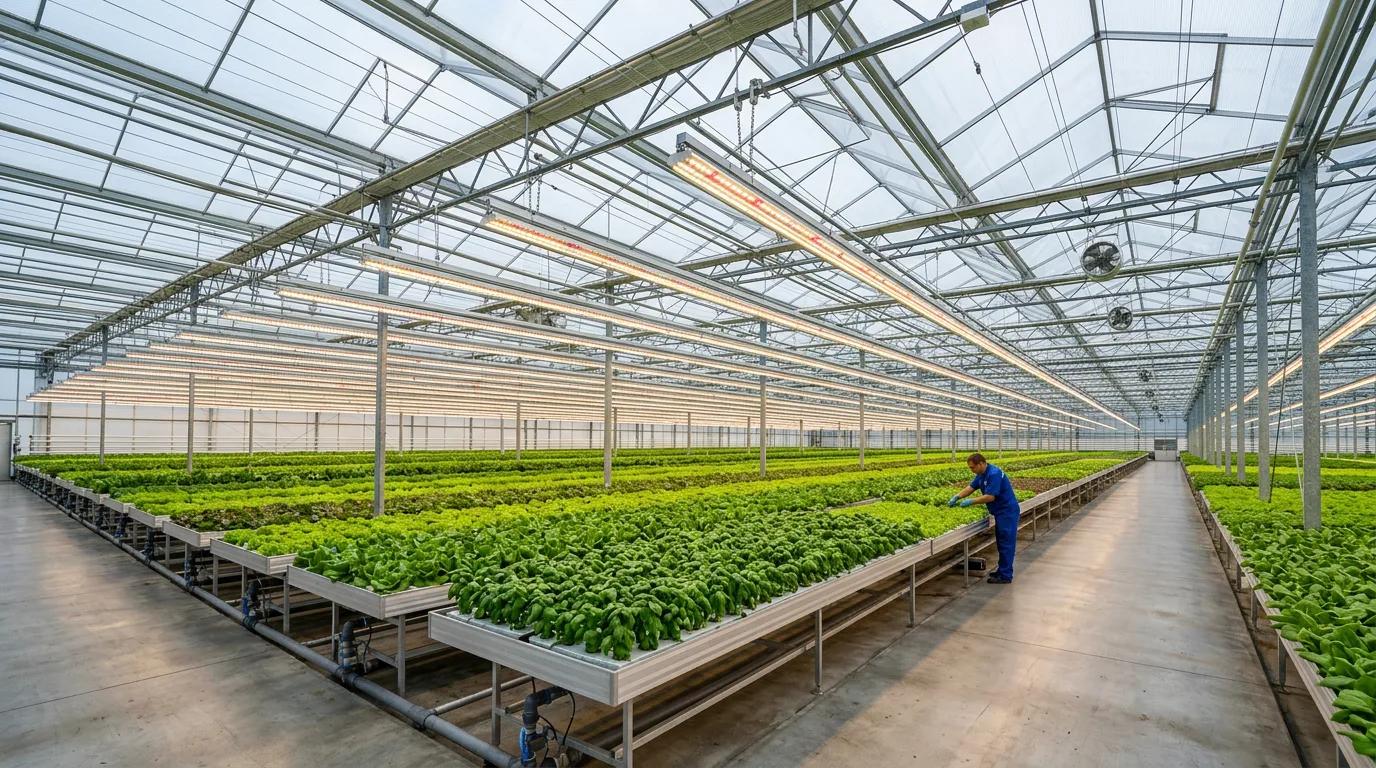
Why Horticultural LED?
Understanding the key metrics of photobiology and the technological superiority of modern LEDs over traditional solutions.
PAR
400 - 700 nm
Photosynthetically Active Radiation. Only light within this wavelength range drives photosynthesis.
PPFD
μmol/m²/s
Photosynthetic Photon Flux Density. Measures the light intensity received by the canopy at a given moment.
PPE
μmol/J
Photosynthetic Photon Efficacy. The key ratio measuring how many useful photons are produced per joule of electricity.
HPS vs Horticultural LED Comparison
2025 Data - Latest generation chips
| Characteristic | Traditional HPS | LED GrowLED PRO |
|---|---|---|
| Efficacy (PPE) | 1.2 - 1.7 μmol/J | 2.7 - 3.0+ μmol/J |
| Lifespan | 10,000 - 20,000h | 36,000 - 50,000h (L90) |
| Spectrum | Fixed (yellow dominant) | Configurable full spectrum |
| Radiant heat | High (infrared) | Reduced by 60-80% |
| Dimming | No / limited | 0-100% linear |
| Consumption/m²/year | ~325 kWh | ~160-195 kWh |
| Automation integration | Basic (on/off) | Dynamic DLI, IoT, 0-10V/DALI |
Full Spectrum vs Red/Blue
The complete spectrum (white + red) promotes balanced growth and better morphogenesis. Pure red/blue maximises raw photosynthetic efficiency but may alter morphology.
Far-Red 730nm
Far-red acts on phytochrome (Pfr/Pr), promotes stem elongation, improves assimilate distribution and accelerates flowering. Essential for high-value crops.
Premium Chips
Our fixtures integrate Samsung LM301H/B, OSRAM OSLON and Lumileds LUXEON chips, guaranteeing industrial-grade efficiency and reliability.
Documented Yield Gains
Measured and published results by crop, based on meta-analyses and trials under real conditions.
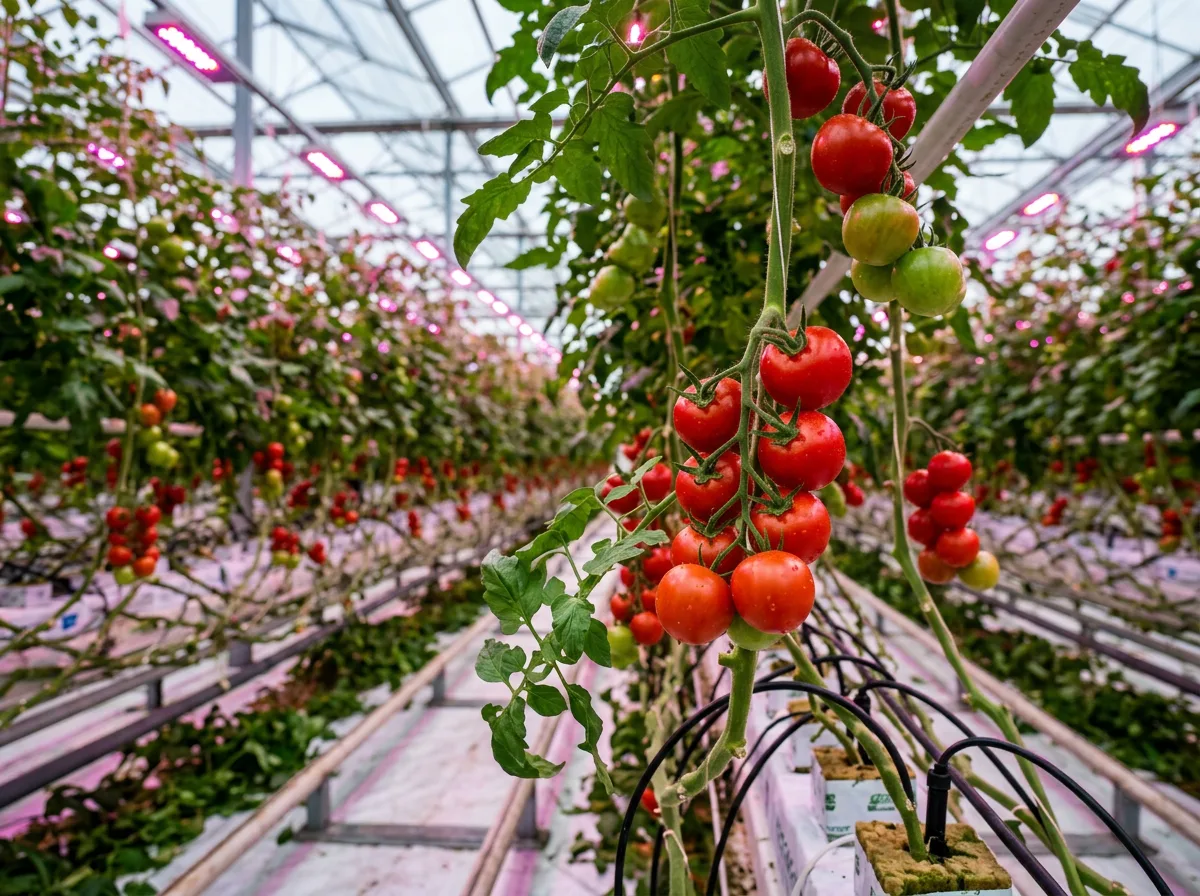 +40%
+40%
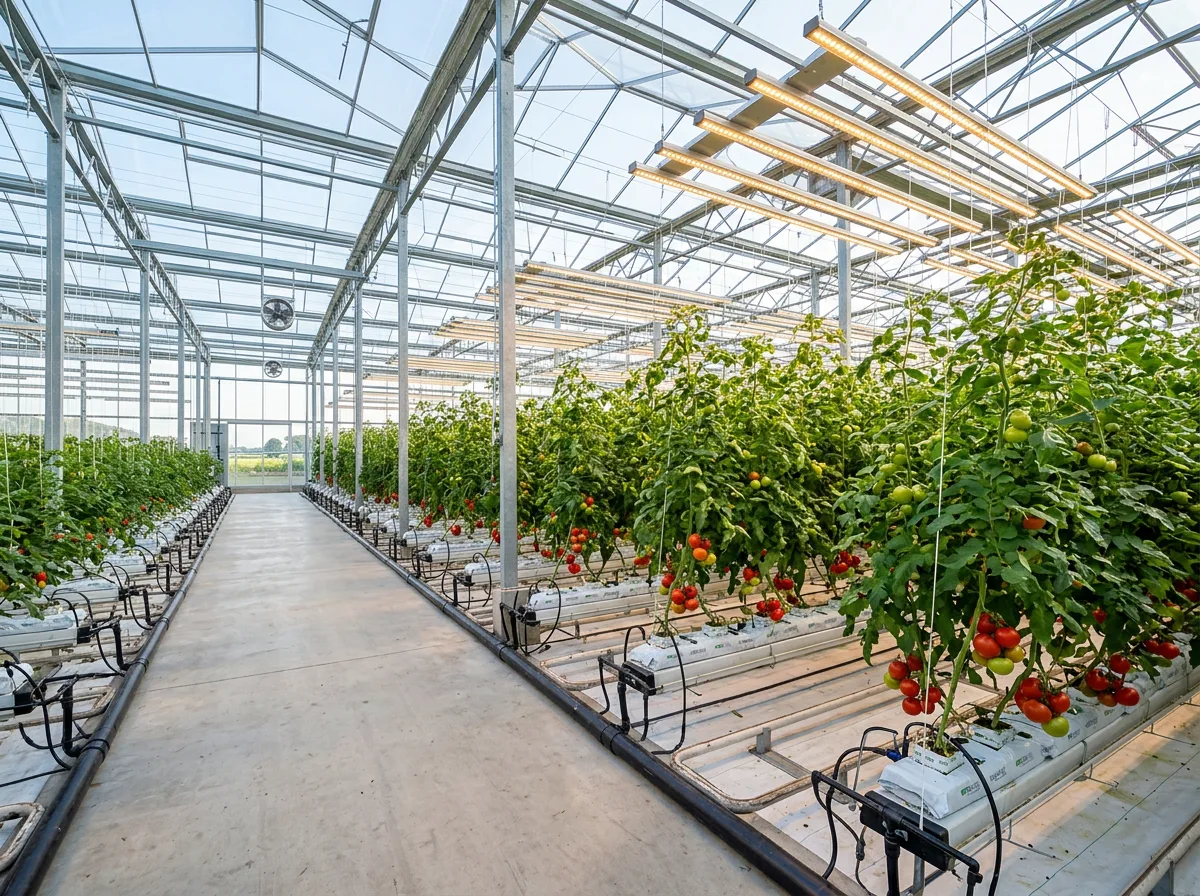
Tomato
Target: 90-100 kg/m²/year
+40% average documented yield gain in a meta-analysis of 31 studies. Optimised LED lighting improves fruit set, sizing and flavour quality.
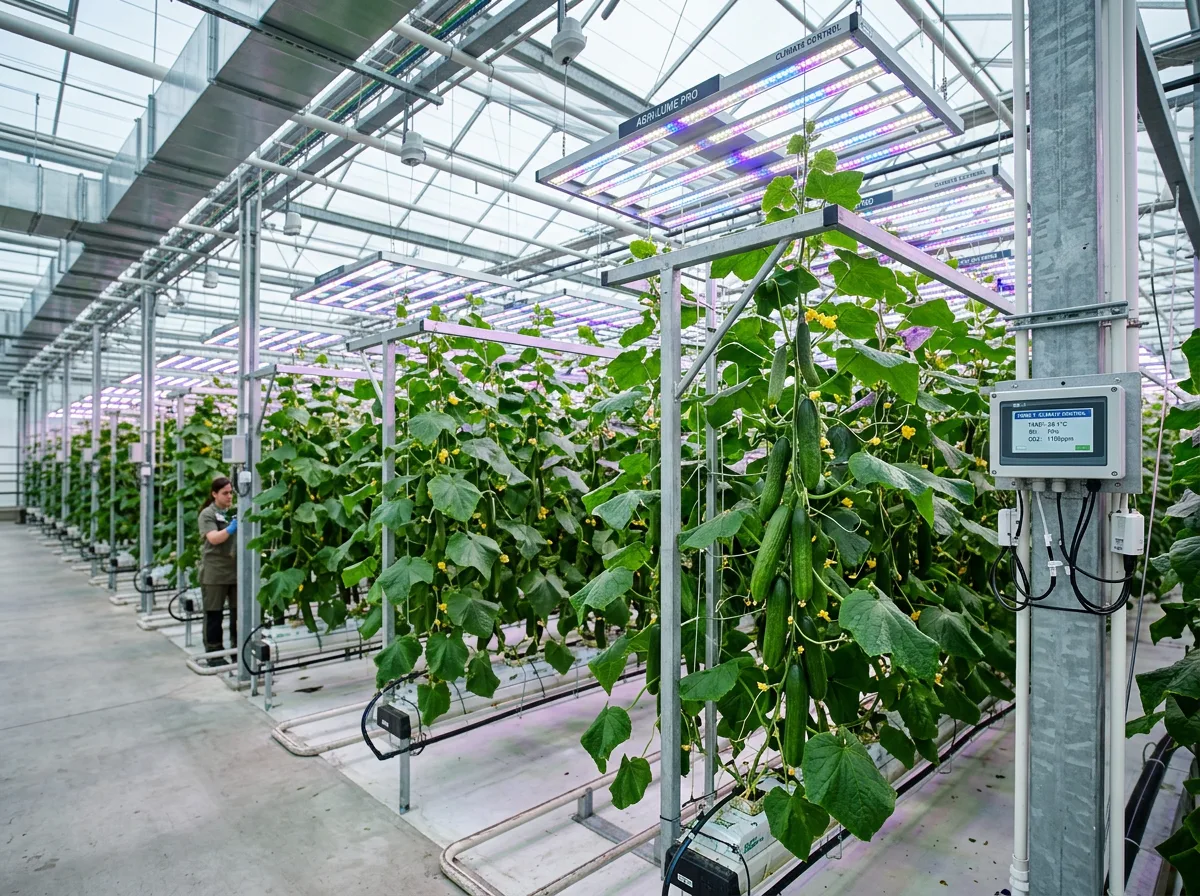 +20-30%
Cucumber
Significant energy/kg reduction
+20 to 30% yield with reduced energy consumption per kg produced. The adapted spectrum promotes elongation and early maturity.
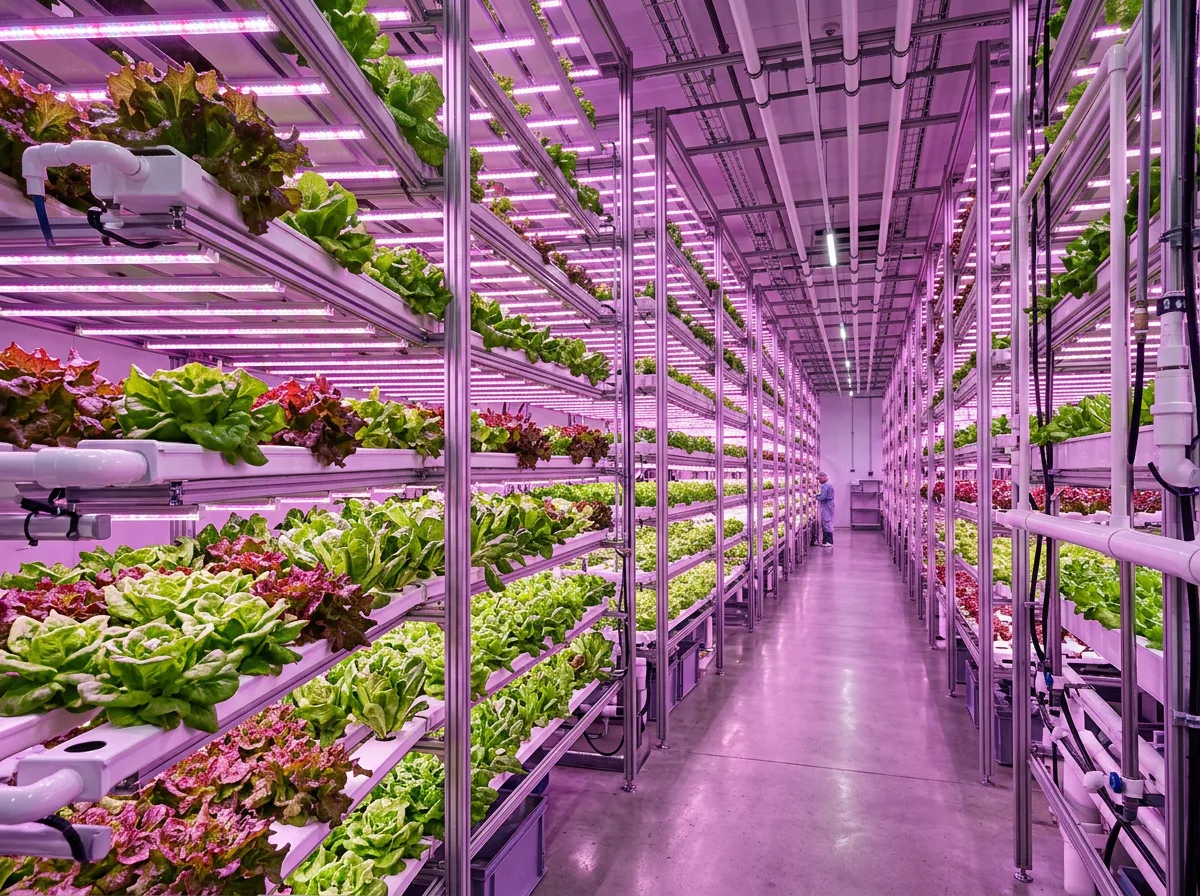 Indoor
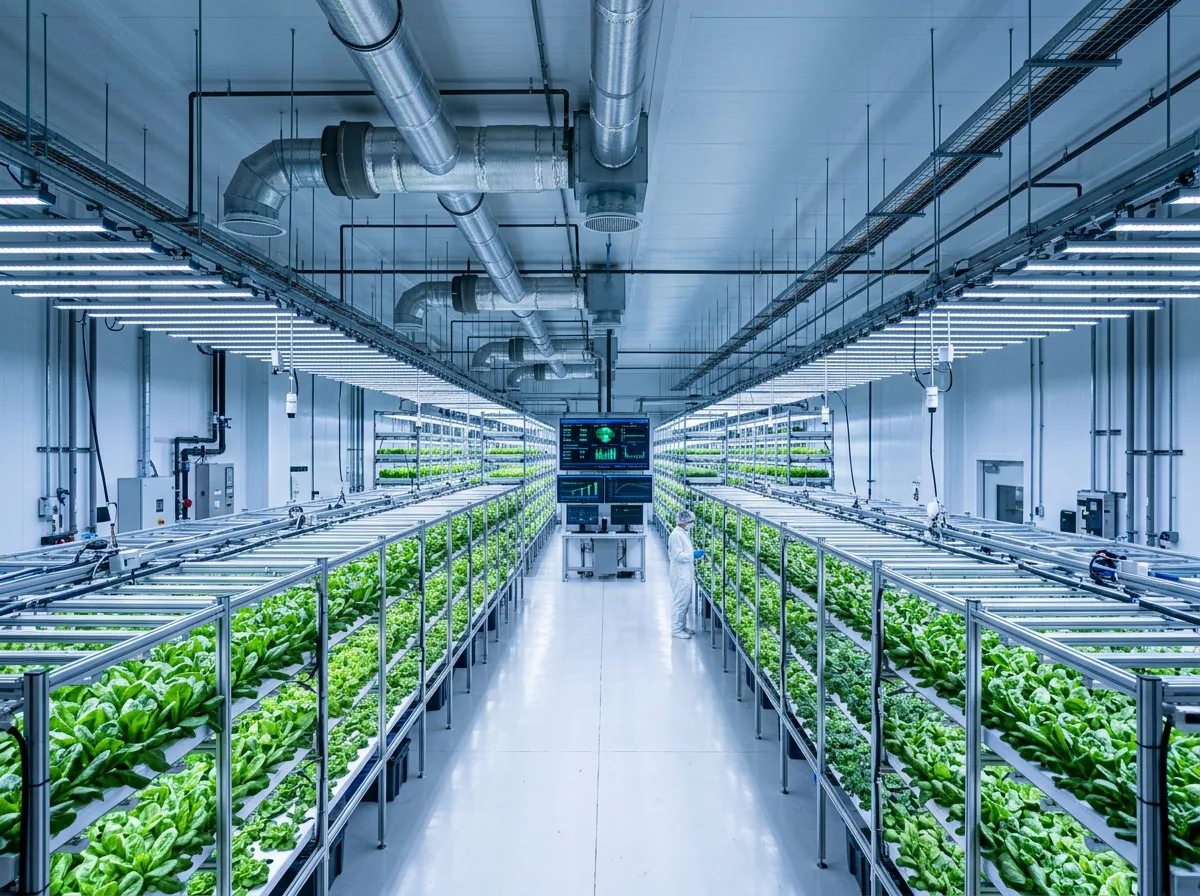
Indoor Lettuce
Optimal DLI: 11.5 mol/m²/d
Consumption of 5 to 20 kWh/kg depending on the system. DLI and spectrum optimisation allows shortened cycles and consistent quality year-round.
 Premium
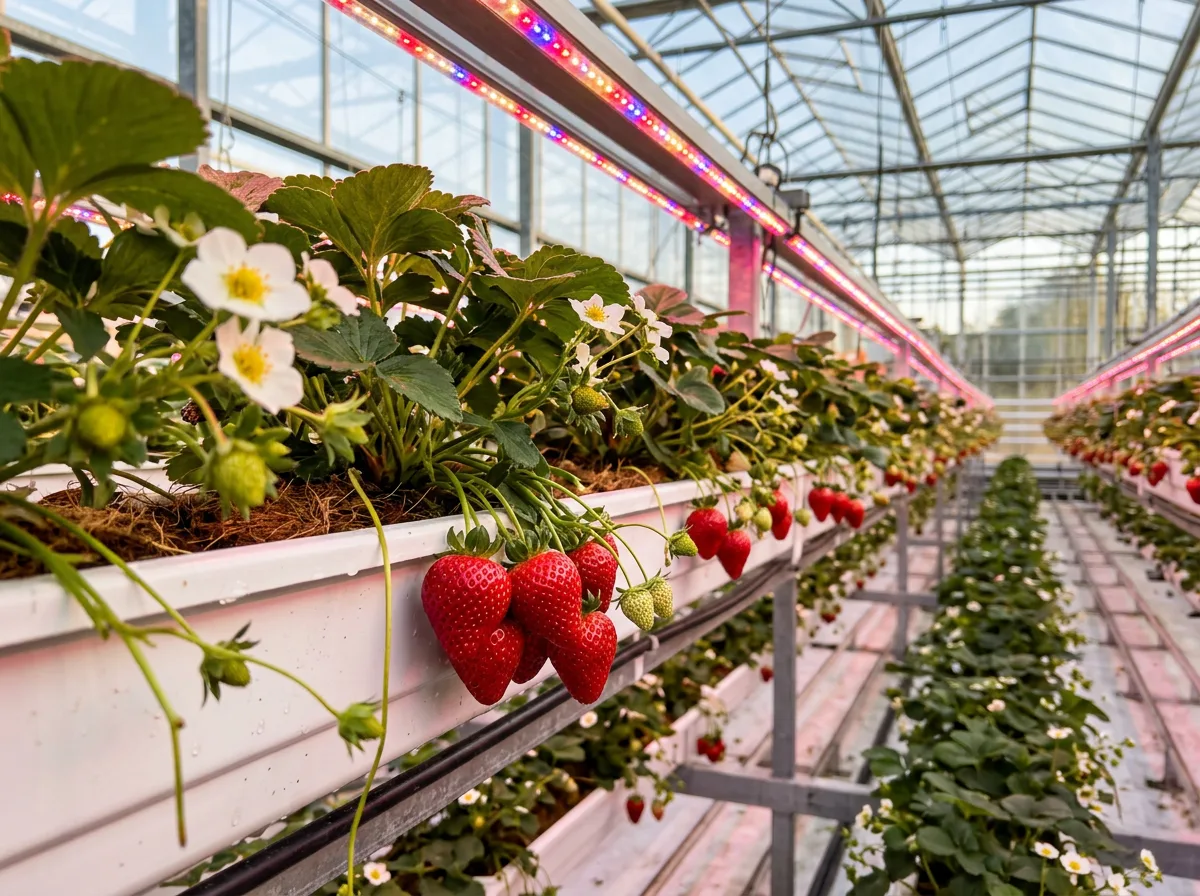
Strawberry
DLI: 17-28 mol/m²/d
LED improves colour, sugar content (Brix) and firmness. Far-red stimulates flowering and extends the production season.
 Quality+
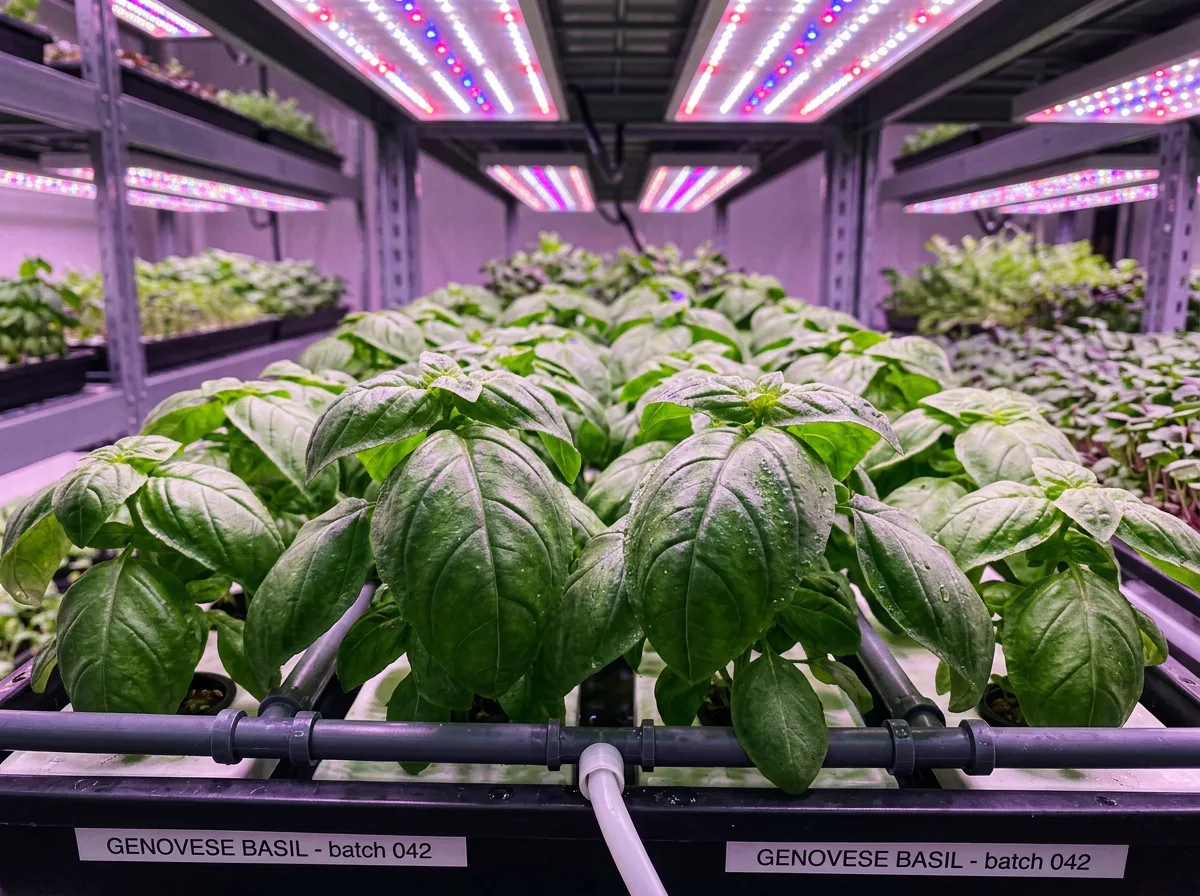
Basil & Herbs
DLI: 12-26 mol/m²/d
Increased biomass and improved antioxidant quality. The spectrum enriched with blue and UV-A increases the concentration of essential oils and phenolic compounds.
 High value
Medical Cannabis
500-1050 μmol/m²/s
DLI of 30-40 mol/m²/d for maximum yields. Spectral control allows optimisation of the cannabinoid and terpene profile according to therapeutic requirements.
Water Savings & Optimised Cycles
Beyond energy, LED transforms the entire microclimate of the greenhouse and allows every production parameter to be optimised.
Reduced radiant heat
Less infrared radiation = less plant transpiration = less irrigation required. Leaf temperature remains stable.
Controlled DLI & optimised sequences
Dynamic DLI (Daily Light Integral) control allows real-time adjustment of lighting based on natural sunlight, reducing both energy and water usage.
Extended photoperiod
Extending the photoperiod with low-intensity LED lighting can boost production by +26% (tomato) without thermal stress.
More rotations per year
Shorter growing cycles thanks to constant, optimised DLI. Possibility of adding 1 to 2 extra rotations per year in indoor farming.
Water consumption
Production potential
Return on Investment Calculator
Estimate your savings in a few clicks
Your Results
Annual savings
0 €
Return on investment
- ans
Consumption reduction
CO2 avoided
0 t/an
Vertical Farms & Indoor Farming
In vertical farms, lighting and dehumidification account for 65 to 80% of total energy consumption. Every efficiency gain is critical.
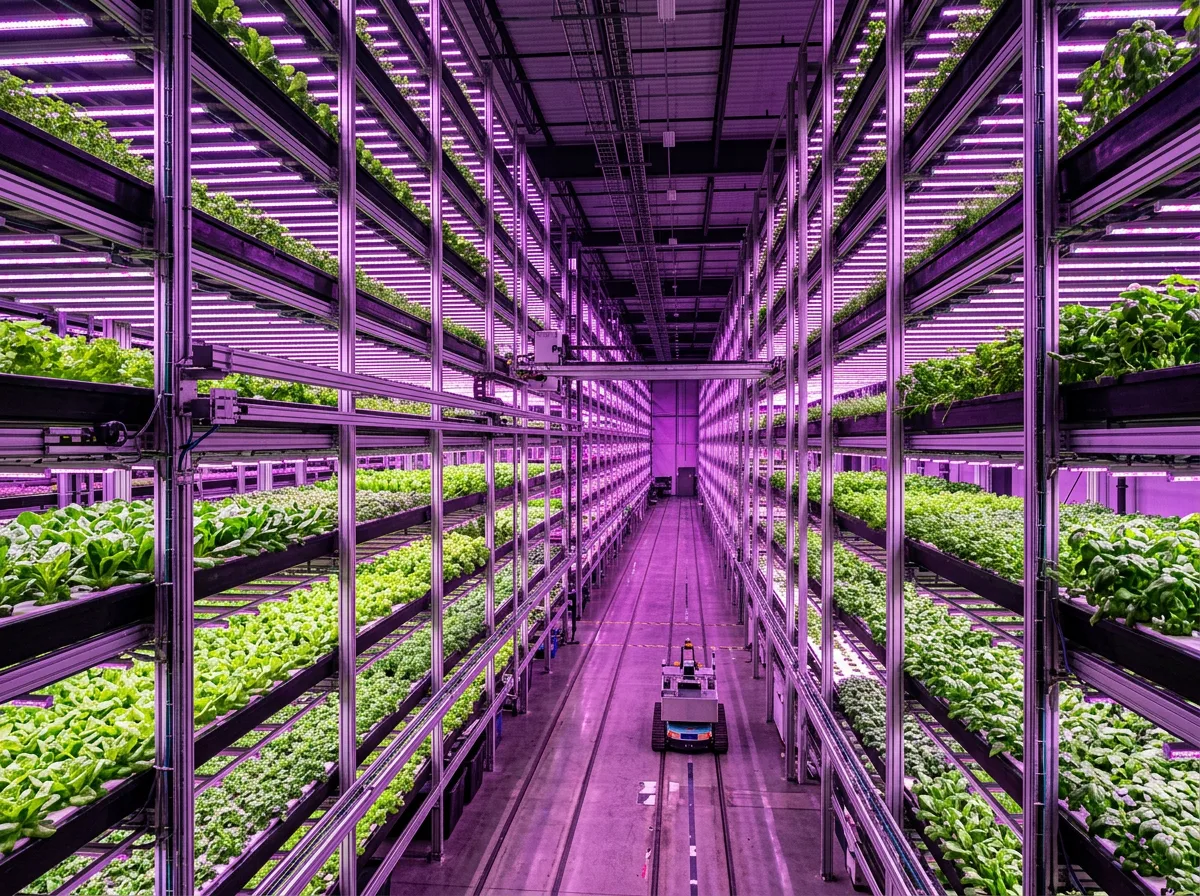
Typical energy consumption
Lighting + dehumidification
Lettuce
5-20 kWh/kgMost energy-efficient crop in indoor farming
Aromatic herbs
3-15 kWh/kgHigh added value, short cycles
Fruiting vegetables
15-50 kWh/kgTomatoes, peppers, cucumbers – high light demand
Cloud & IoT Integration
Dynamic DLI, zone dimming, integrated PAR sensors and control via automation systems (0-10V, DALI, cloud protocols) for real-time energy management.
Optimal DLI per Crop
The Daily Light Integral (DLI) is the total quantity of PAR photons received per m² over 24 hours. Here are the optimal ranges to maximise yield and quality.
Tomato
22-30
mol/m²/day
Lettuce
12-16
mol/m²/day
Strawberry
17-28
mol/m²/day
Basil
12-26
mol/m²/day
Cannabis
30-40
mol/m²/day
How to read these values?
DLI (Daily Light Integral) is measured in mol/m²/day. It represents the integral of PPFD over 24 hours. A DLI of 20 mol/m²/d is equivalent, for example, to a constant PPFD of ~230 μmol/m²/s for 24h, or ~460 μmol/m²/s for 12h. Our fixtures allow the target DLI to be reached and precisely maintained through dynamic dimming.
Since installing GrowLED PRO LEDs, we have reduced our electricity bill by €12,000/year and increased our yields by 45%. Dynamic DLI control has transformed our day-to-day management.
J.-M. D.
Production Director — Market garden greenhouse, Lorraine
Optimise Your Production
Discover how much you could save with LED lighting sized for your operation. Free personalised study, no commitment.
Technical guides: LED lighting in greenhouses
Éclairage LED horticole pour collectivités et espaces publics végétalisés
LED pour marchés publics végétalisés : BIM/IFC, rédaction CCTP technique, critères de sélection fournisseurs, exemples de projets collectivités et obligations légales.
Éclairage LED pour fraisiers en serre : PPFD, spectre et photoperiodisme
Fraises sous LED : photoperiodisme (remontants, unifères), tableau PPFD par phase, protocole EOD-FR 730 nm et gain Brix +15–40%. Résultats de producteurs français.
Éclairage LED pour ferme verticale : optimiser la production au m²
Ferme verticale : coût énergétique par kg produit, analyse des faillites AeroFarms/Bowery, modèles économiques viables et spécifications LED par rack.